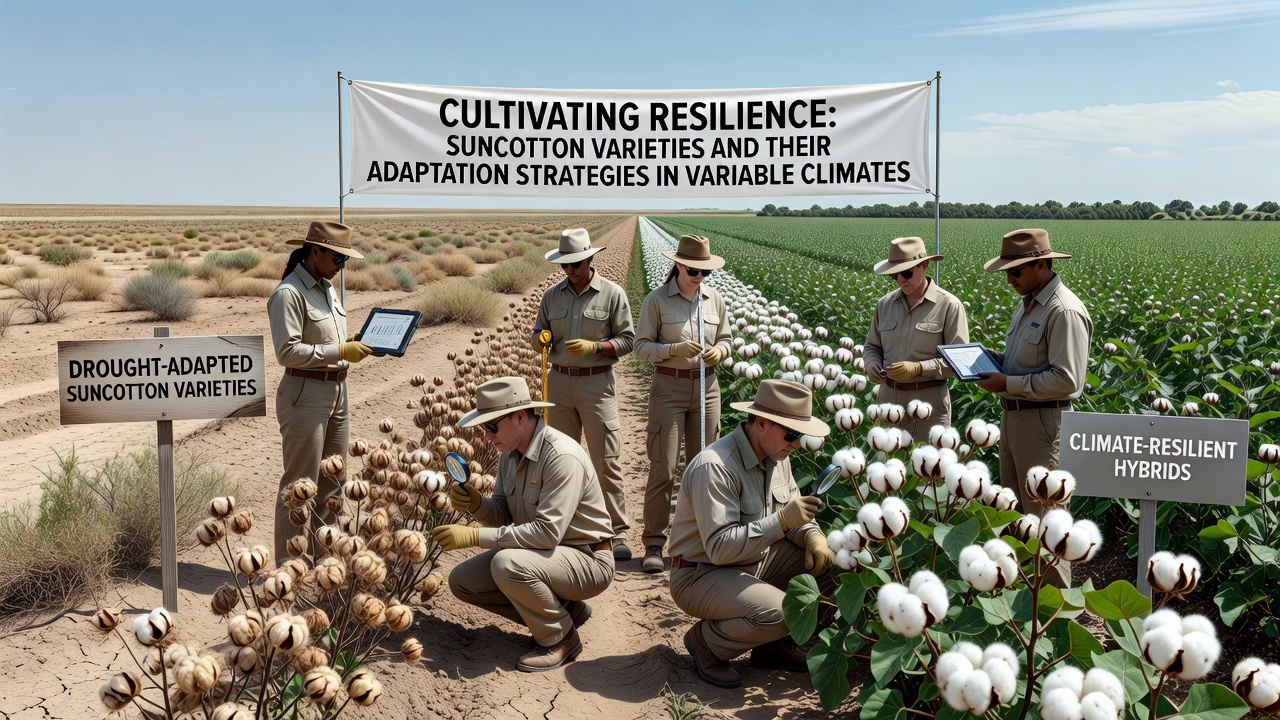
Harper Krüger · 8 September 2026
Cultivating Resilience: Suncotton Varieties and Their Adaptation Strategies in Variable Climates
Researchers have documented how suncotton varieties respond to shifting temperature ranges and irregular rainfall patterns across multiple growing regions, and these findings highlight specific genetic traits that support continued productivity when conditions fluctuate. Data from field trials indicate that certain suncotton lines maintain fiber yield even when soil moisture drops below typical thresholds for conventional cotton, while others tolerate brief heat spikes without significant boll loss.
Key Suncotton Varieties and Their Traits
Breeding programs have developed several distinct suncotton lines, each carrying combinations of traits suited to different stress factors. One group features deep root systems that access water from lower soil layers during dry spells, and another incorporates leaf structures that reduce transpiration rates under high evaporative demand. Studies conducted in variable climate zones show these lines achieve stable germination rates across temperature swings of up to 15 degrees Celsius between day and night.
Additional varieties emphasize fiber quality retention when exposed to late-season humidity changes or early frosts. Observers note that these adaptations arise from targeted selection for both yield components and stress-response genes, with results tracked through multi-year trials in regions experiencing increasing climate variability.
Adaptation Mechanisms in Practice
Plants employ several physiological responses when facing water deficits or temperature extremes. Stomatal regulation allows suncotton to conserve moisture during peak heat hours while still supporting photosynthesis at sufficient levels for boll development. Certain lines also accumulate compatible solutes that protect cellular structures during prolonged drought periods.
Field data collected over the past decade reveal that suncotton varieties with enhanced antioxidant activity experience less oxidative damage after repeated heat events. These mechanisms work together so that overall plant performance remains consistent even when precipitation arrives in irregular bursts rather than steady seasonal patterns.
Regional Examples and Performance Data
In areas with Mediterranean-type climates, suncotton plantings have demonstrated resilience to both extended dry intervals and sudden heavy rainfall events that can cause root zone saturation. Australian agricultural records show selected lines maintained average yields within 8 percent of irrigated benchmarks during seasons marked by above-average temperature variability. Similar patterns appear in North American trial sites where soil moisture monitoring confirmed deeper rooting contributed to sustained growth through summer dry spells.
European research stations report that suncotton hybrids incorporating heat-shock protein genes exhibit reduced flower abortion rates during short periods above 38 degrees Celsius. These outcomes align with broader observations that combining multiple stress-tolerance traits produces more reliable results than single-trait improvements alone.
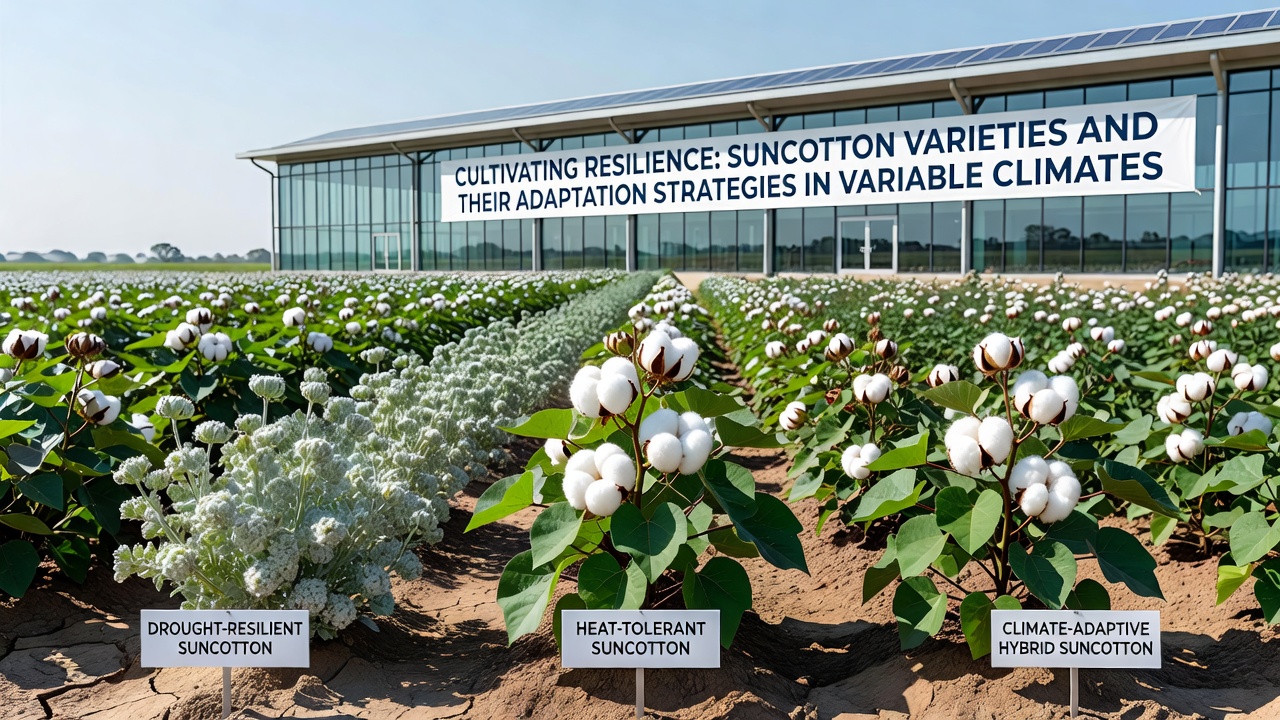
Recent Observations from 2026 Growing Season
Reports compiled in September 2026 from multiple monitoring networks indicate continued progress in matching suncotton genetics to local climate patterns. Updated datasets from the USDA Agricultural Research Service highlight yield stability in test plots across the southern plains despite variable spring rainfall totals. Parallel monitoring by Australian agencies recorded comparable results in regions where irrigation allocations fluctuated due to upstream water management decisions.
These seasonal findings build on earlier work showing that integrated management practices, such as adjusted planting dates combined with stress-tolerant varieties, further reduce risk when climate conditions deviate from long-term averages. Ongoing trials continue to evaluate how these strategies perform under successive years of altered weather sequences.
Future Breeding Directions
Current programs focus on stacking additional traits that address combined stresses rather than isolated factors. Genomic selection tools accelerate identification of lines that perform well under both drought and heat combinations projected for coming decades. International collaboration allows exchange of germplasm adapted to contrasting environments, speeding progress toward varieties that deliver consistent performance across wider geographic ranges.
Monitoring networks established in variable climate zones supply real-time data that informs selection priorities each season. This feedback loop supports refinement of adaptation packages that pair genetics with agronomic practices suited to local conditions.
Conclusion
Suncotton varieties demonstrate measurable adaptation through root architecture, stomatal control, and cellular protection mechanisms that support yield stability under fluctuating conditions. Data from diverse regions confirm these traits function across different stress profiles, while recent 2026 observations reinforce the value of continued breeding and management integration. Ongoing research supplies updated guidance for matching specific lines to evolving climate patterns.