Ines Keller · 17 November 2026
Investigating Carbon Capture Potential of Specialized Cotton Strains Grown in Dryland Regions
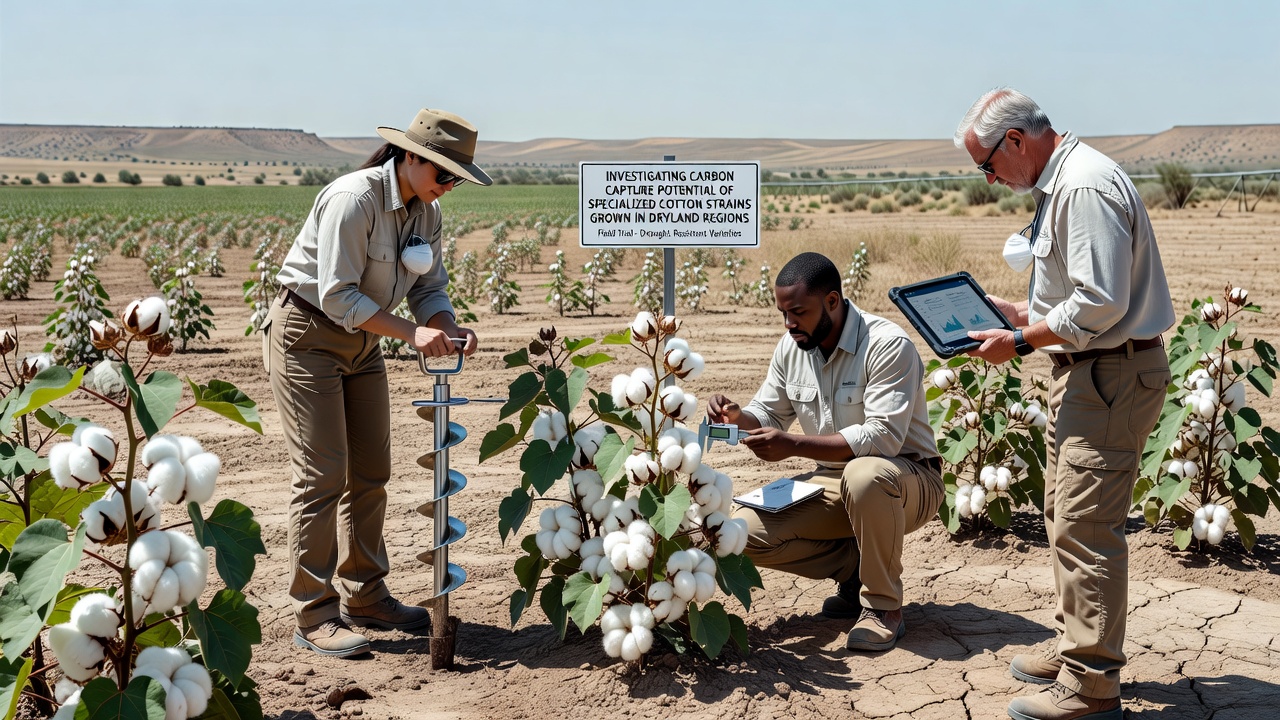
Specialized cotton strains developed for arid conditions show measurable capacity to sequester atmospheric carbon while surviving limited water availability, and researchers continue to examine these traits through field trials and soil analysis programs across multiple continents. Data from long-term monitoring sites indicate that certain heat-adapted varieties allocate more biomass below ground, which contributes to stable carbon storage in semi-arid soils where decomposition rates remain low due to moisture constraints.
Dryland Adaptation Traits and Root System Development
Breeding programs have selected cotton lines that maintain photosynthesis under high temperatures and low soil moisture, traits that also influence how much carbon moves into root tissues and eventually into the surrounding soil matrix. Observers note deeper root penetration in these strains compared with conventional varieties, which allows greater exploration of soil volumes and subsequent deposition of organic compounds at depths where carbon persists longer. Studies conducted in the southwestern United States and parts of northern Australia document root biomass increases of 15 to 25 percent in selected lines, figures that correlate with elevated soil organic carbon measurements after multiple growing seasons.
Measurement Approaches Used in Current Research
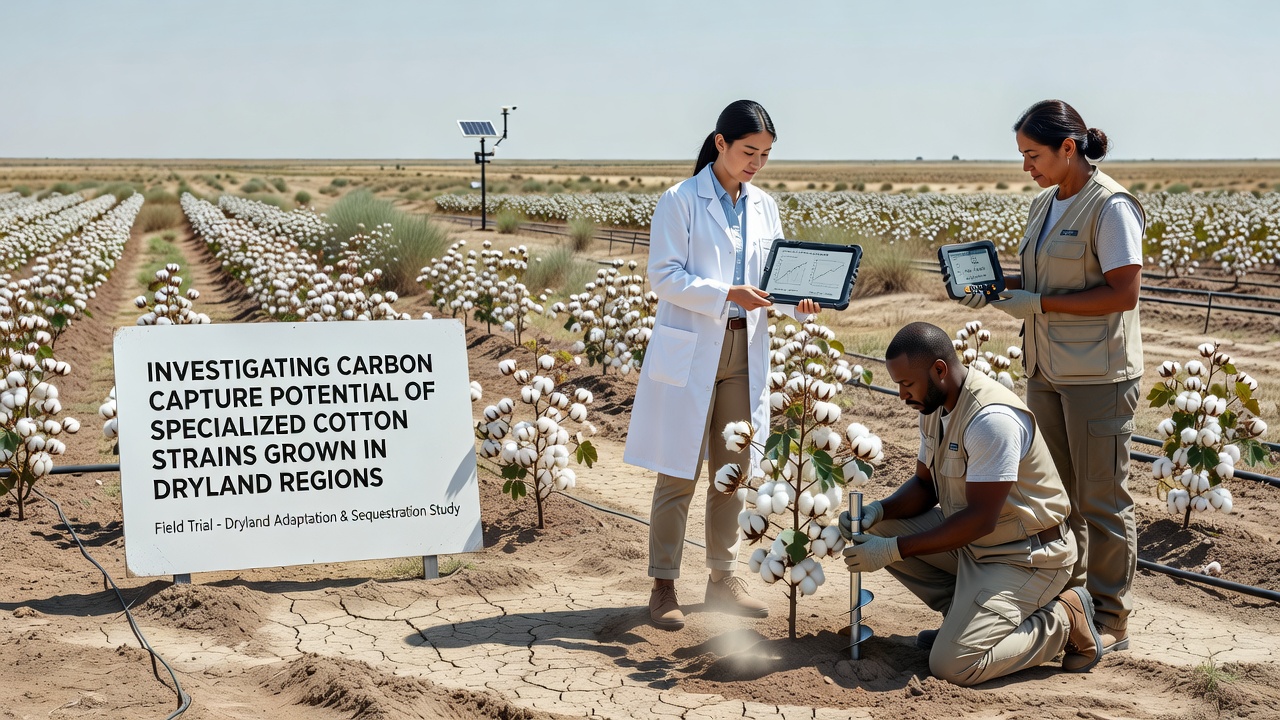
Scientists employ a combination of eddy covariance towers, soil core sampling, and stable isotope tracing to quantify net carbon uptake in these dryland systems. Results compiled through 2025 reveal seasonal patterns where peak carbon assimilation occurs during cooler morning hours before vapor pressure deficits rise sharply, while nighttime respiration stays suppressed because of limited microbial activity in dry soils. As November 2026 approaches, several international consortia plan coordinated sampling campaigns to compare data across sites in the American Southwest, the Sahel region, and central Australia, aiming to standardize protocols that account for variable rainfall events and temperature extremes typical of these environments.
Soil Carbon Dynamics and Microbial Interactions
Soil microbes in dryland cotton fields process root exudates at slower rates than in mesic environments, which favors the formation of mineral-associated organic matter that resists further breakdown. Research teams working with Australian government agencies have tracked shifts in microbial community composition under drought-selected cotton, noting higher proportions of fungi that produce glomalin, a compound linked to aggregate stability and long-term carbon protection. Parallel work supported by Canadian agricultural research stations has examined how intermittent irrigation interacts with these microbial processes, showing that carefully timed water applications can enhance carbon retention without reversing the drought-adaptation benefits already present in the plant material.
Integration with Regional Land Management Practices
Land managers incorporate these specialized cotton strains into rotation sequences that include cover crops and reduced tillage, practices that compound carbon gains when combined with genetic traits for deeper rooting. Reports from the United States Department of Agriculture highlight pilot projects where dryland cotton plots stored an additional 0.8 to 1.2 metric tons of carbon per hectare over five years compared with adjacent fallow areas, though results vary with soil texture and historical land use. Such outcomes depend on continued selection pressure for root architecture alongside above-ground drought tolerance, an approach that aligns breeding objectives with measurable sequestration targets.
Conclusion
Ongoing investigations continue to refine understanding of how specialized cotton genetics interact with dryland soil conditions to influence carbon capture rates, and coordinated efforts scheduled for late 2026 will supply comparative datasets that clarify the scalability of these findings. The combination of root-focused breeding, precise field measurements, and integration with established management techniques provides a factual basis for evaluating the contribution these systems can make to broader carbon accounting frameworks in water-limited agricultural zones.