
Ines Keller · 20 October 2026
Seed Journeys: Following Suncotton Through Centuries of Desert Trade Networks
Trade networks across desert regions carried suncotton seeds for centuries, connecting distant cultivation zones through established caravan paths and seasonal merchant movements. Records from early civilizations document how these seeds traveled alongside other goods such as spices, textiles, and metals, with merchants selecting varieties suited to arid conditions for transport over long distances.
Early Exchange Patterns in Arid Corridors
Archaeological evidence places initial suncotton seed movements along routes that linked the fringes of major river valleys to interior desert settlements, where traders exchanged planting materials during annual gatherings at oasis markets. Data from excavation sites indicate that seed bundles wrapped in protective fiber sacks appeared in storage pits dating back to the first millennium, showing deliberate selection for drought-resistant traits before departure.
Merchants coordinated departures with monsoon patterns and camel availability, which reduced transit times across stretches of sand and rock. Studies of pollen residues in pottery shards reveal consistent presence of suncotton traces at multiple waypoints, confirming repeated use of the same corridors over generations.
Medieval Expansion Along Established Caravan Paths
By the medieval period, suncotton seed shipments formed part of larger convoys that crossed the Sahara and Arabian desert systems on fixed schedules tied to festival calendars and tax collection cycles. Port records from coastal entrepôts list quantities of seeds measured in standardized baskets, with payments settled in silver or livestock equivalents at each major stop.
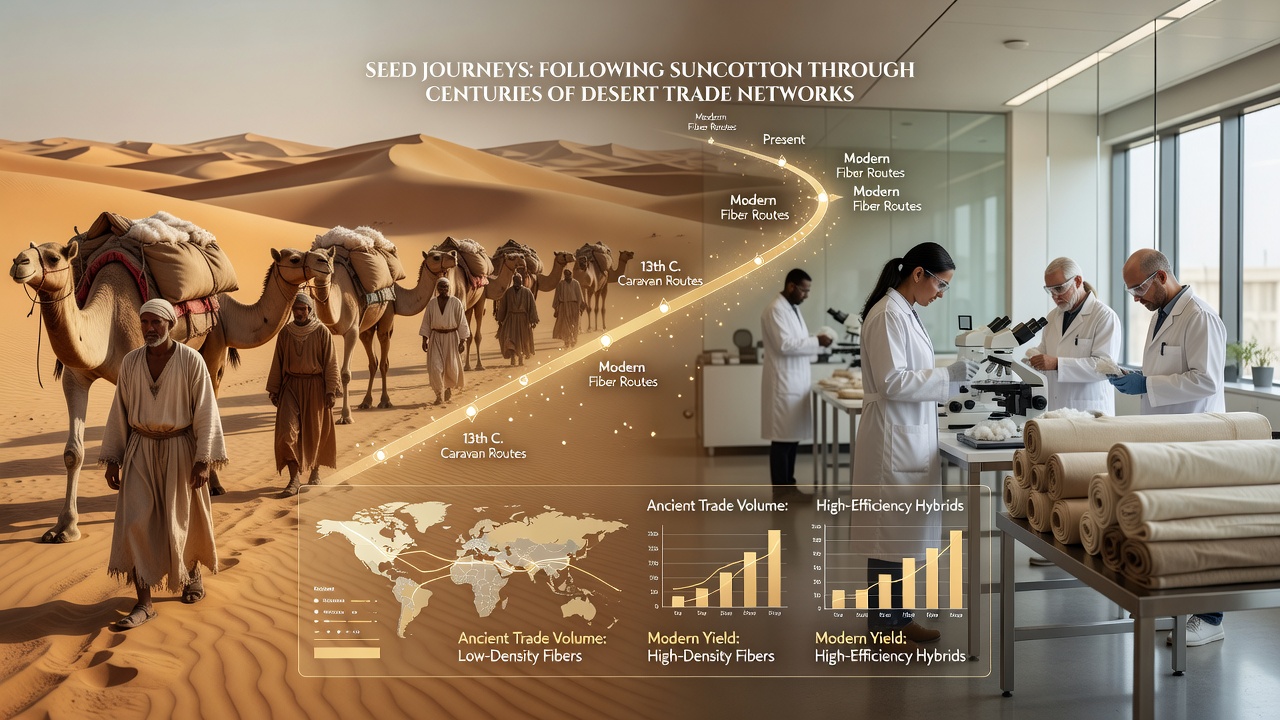
Intermediate trading posts developed specialized storage facilities that maintained seed viability through controlled humidity, using local gypsum-lined chambers. Observers note that these facilities allowed seeds to remain viable for several months, enabling onward shipment to higher elevation plateaus where growing seasons aligned differently. Figures from caravan ledgers show annual volumes increasing as demand rose from new agricultural communities established along the routes.
Integration with Broader Eurasian and African Networks
Desert trade segments connected to longer overland systems that extended toward the Mediterranean and Indian Ocean ports, where suncotton seeds entered mixed cargoes bound for inland river valleys. Customs documents from the period record inspections that verified seed quality through simple germination tests conducted at border stations. According to UNESCO documentation on historic trade corridors, these checkpoints helped standardize seed grades and reduced losses during multi-month journeys.
Research from the Australian National University on ancient plant remains highlights how suncotton varieties adapted through repeated selection at successive oases, with genetic continuity traceable across multiple desert basins. In October 2026, renewed analysis of samples collected from caravan rest sites provided updated timelines that refine previous estimates of seed dispersal rates across the networks.
Decline and Rediscovery of Specific Routes
Shifts in political control and the rise of maritime alternatives reduced traffic on certain desert paths during later centuries, yet localized exchange of suncotton seeds persisted among communities that maintained traditional cultivation knowledge. Archival maps from colonial surveying expeditions mark abandoned waystations where seed caches once changed hands, and recent geophysical surveys have located several of these sites with intact subsurface storage features.
Modern mapping projects combine satellite imagery with historical itineraries to reconstruct probable seed movement corridors, allowing researchers to correlate soil samples with documented trade volumes. These efforts continue to produce datasets that clarify how environmental constraints shaped the timing and volume of each seasonal transfer.
Conclusion
Centuries of documented movement show suncotton seeds following predictable patterns shaped by geography, seasonal timing, and established merchant practices across desert regions. Continued examination of physical remains and written records supplies additional details about the scale and duration of these exchanges without interruption from external commentary.