Harper Krüger · 6 October 2026
The Interplay Between Local Ecosystems and High Performance Cotton Strains in Dry Regions
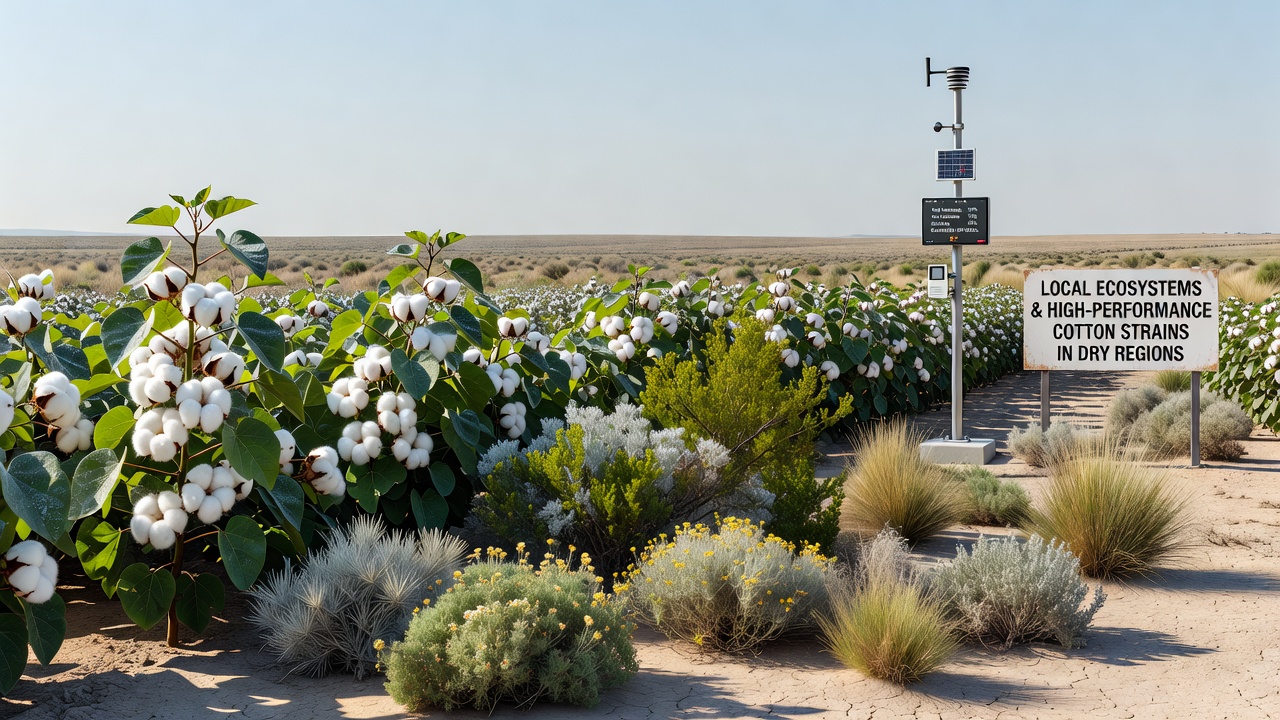
High performance cotton strains now occupy significant acreage in arid zones where annual rainfall often falls below 300 millimeters, and the relationship between these crops and surrounding ecosystems determines long term viability for both agriculture and biodiversity. Researchers track how native soil microbes, insect communities, and sparse vegetation influence cotton root development and fiber quality while cotton fields in turn alter water tables, nutrient cycles, and habitat availability for local species.
Ecosystem Pressures Shaping Cotton Performance
Dry region ecosystems impose specific constraints that drive selection for drought tolerant cotton genetics, and field observations from multiple continents show that native rhizobacteria often enhance nutrient uptake in stressed plants. Studies conducted across the southwestern United States and parts of northern Australia indicate that certain microbial consortia improve water use efficiency by 15 to 22 percent when present in the root zone, whereas their absence correlates with higher irrigation demands. Pollinator networks that include solitary bees and hoverflies contribute to outcrossing rates in hybrid varieties, and data collected over five seasons reveal that fields bordering intact shrubland maintain 8 percent higher boll set compared with isolated plantings.
Soil crust communities composed of cyanobacteria and lichens stabilize surfaces against wind erosion yet compete with cotton seedlings for surface moisture during establishment, and integrated management approaches now account for these interactions by adjusting planting windows and residue retention practices. In October 2026 the International Center for Agricultural Research in the Dry Areas released updated mapping layers that overlay cotton suitability zones with biodiversity hotspots, allowing planners to identify corridors where ecosystem services remain intact while supporting commercial production.
Cotton Cultivation Effects on Local Biodiversity
High performance cotton strains modify local ecosystems through altered water extraction patterns and changes in ground cover duration, and monitoring programs document shifts in small mammal and reptile populations when irrigation expands into former rangeland. In the Murray Darling Basin of Australia, satellite imagery combined with ground surveys shows that cotton rotations with winter cereals can increase soil organic carbon by 0.3 to 0.7 percent over six years, yet continuous cotton reduces earthworm diversity by up to 40 percent relative to mixed systems. Runoff from fertigated fields carries nitrogen and phosphorus into ephemeral streams, and downstream water quality measurements indicate elevated algal biomass during low flow periods that affects aquatic invertebrate communities.
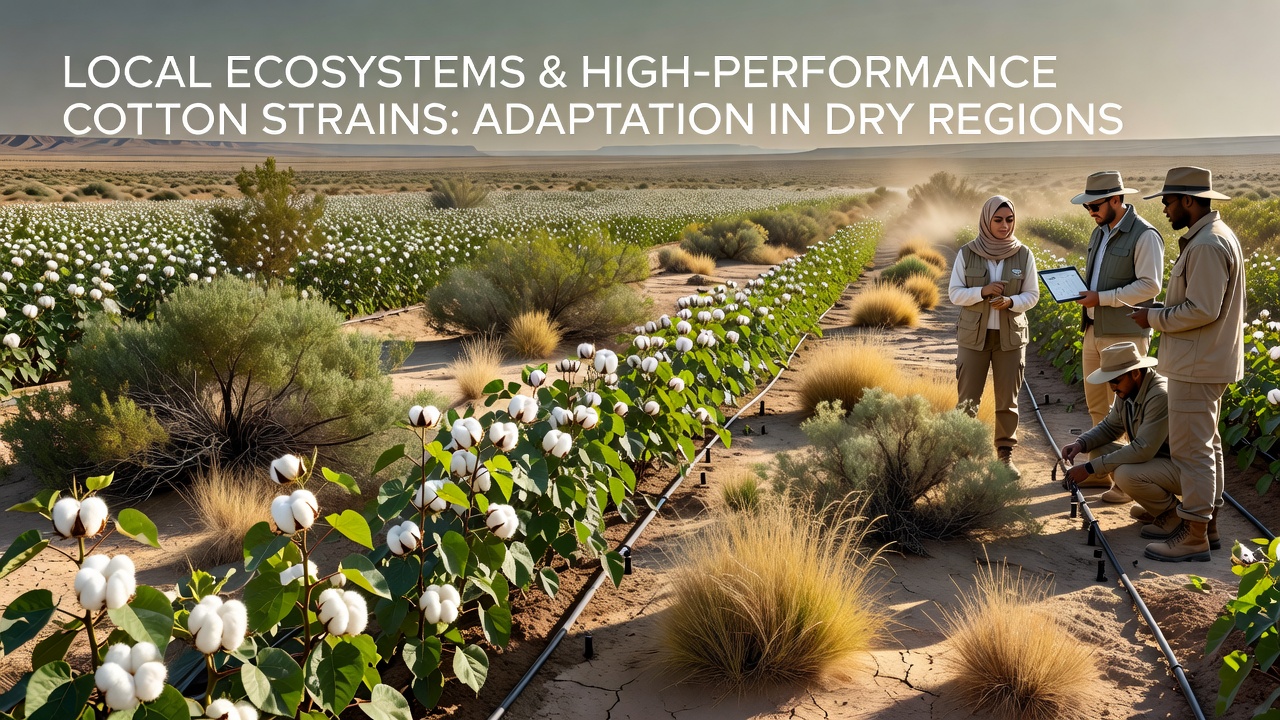
Buffer strips of native grasses and forbs planted along field margins support predatory insects that suppress cotton pests, and trials in the Texas High Plains demonstrate 12 to 18 percent reductions in lygus bug pressure when strips exceed 10 meters in width. These strips also provide refuge for ground nesting birds whose populations have declined in intensively farmed districts, and counts from the past decade record higher fledging success rates in landscapes containing at least 5 percent non cropped habitat.
Water and Nutrient Cycling Interactions
Irrigation scheduling for high performance strains now incorporates real time data on aquifer recharge rates and evapotranspiration from surrounding native vegetation, and models developed by research teams in Israel and South Africa demonstrate that deficit irrigation regimes can maintain yields while preserving baseflow to riparian zones. When cotton extracts water from deeper soil layers, it reduces competition with shallow rooted perennials during drought, yet excessive pumping lowers regional water tables and stresses phreatophytic species such as river red gum. Nutrient management plans increasingly rely on precision application guided by soil electrical conductivity maps that reflect both crop demand and natural salinity gradients shaped by local geology.
Evidence from long term trials shows that incorporating legume cover crops between cotton seasons boosts nitrogen fixation and supports mycorrhizal networks that connect cotton roots to native plant communities, and these networks facilitate phosphorus transfer during periods of low availability. In regions where groundwater contains elevated salts, drip systems minimize surface accumulation that would otherwise degrade surrounding soils and limit ecosystem recovery after land use changes.
Regional Examples and Ongoing Monitoring
Across the Sahel zone, partnerships between national agricultural agencies and local cooperatives track how improved cotton varieties interact with acacia based agroforestry systems, and yield records paired with biodiversity inventories indicate stable pest regulation when tree density remains above 20 stems per hectare. In central Asia, restoration of tugai forests adjacent to cotton districts has coincided with reduced dust storm frequency and improved microclimate moderation that benefits fiber development during heat waves. Australian researchers continue to publish annual updates through the Cotton Research and Development Corporation that integrate satellite derived vegetation indices with on farm biodiversity audits, and these reports highlight measurable gains in pollinator abundance where native vegetation corridors connect fragmented habitats.
Conclusion
The documented patterns across dry regions illustrate that high performance cotton strains and local ecosystems function as coupled systems where management decisions affect both agricultural output and ecological integrity, and continued refinement of these interactions depends on sustained data collection from multiple disciplines and geographies. Ongoing integration of ecosystem service metrics into breeding and agronomic programs supports production goals while maintaining the biophysical processes that sustain arid landscapes over decades.